
Find the Source of the Problem
Septic System Inspection in Sanford, NC
Start with an inspection when the cause of your septic problem is unclear. Book Now
Find the Source of the Problem
Start with an inspection when the cause of your septic problem is unclear. Book Now
Septic symptoms can be misleading. A toilet that will not drain may point to a blockage, tank problem, or downstream issue. Wet ground near a drain field may be related to septic wastewater, heavy rain, surface drainage, or another source. An inspection helps narrow the possibilities so repairs are based on observed conditions instead of guesswork.
Septic Repair Sanford provides inspections for homeowners who are dealing with recurring slow drains, sewage odors, backups, alarms, unexplained wet areas, or concerns about an older system. We look at the relevant parts of the system that can be accessed and evaluate how the symptoms fit together. The purpose is to give you a practical explanation of what appears to be happening and what service should come next.
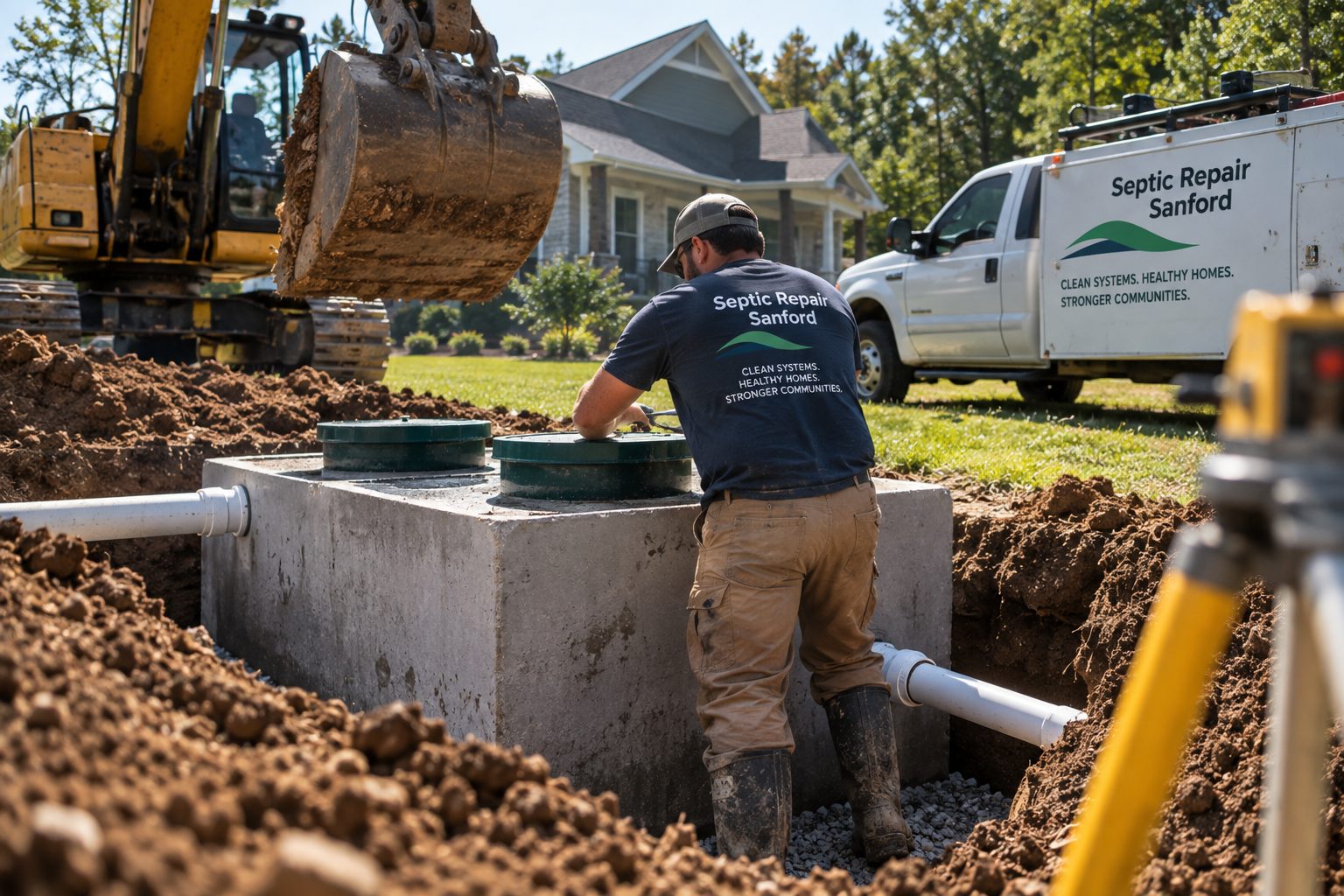
A septic system works as a connected sequence: wastewater leaves the building, reaches the septic tank, separates and partially treats there, and then moves onward for soil treatment and dispersal. A failure or restriction at any point can affect the entire chain. Inspection therefore starts with the complaint but does not stop at the first obvious symptom. We consider wastewater flow, tank conditions, accessible piping, distribution concerns, drainage around the system, and signs that the drain field is struggling. The exact inspection scope depends on system design and site accessibility. Our goal is not to make every underground component visible; it is to gather enough reliable information to identify the most likely problem and recommend a sensible next step.
When several fixtures are affected, we look at the problem as a system-wide issue rather than treating each drain separately. The building sewer, septic tank, outlet, downstream piping, and drain field can all influence how quickly wastewater leaves the house. The timing of symptoms also matters. A sudden backup may suggest a restriction, while a problem that worsens during heavy water use can point in another direction. We use the available evidence to determine whether pumping, sewer line cleaning, repair, or further septic evaluation is the most reasonable next move.
Septic odors can occur indoors or outdoors and may come from more than one location. Plumbing venting, dried traps, damaged piping, tank access issues, or wastewater surfacing near the treatment area may all create odors. Simply noticing a septic smell does not identify the failed component. An inspection focuses on where and when the odor occurs and whether other signs are present. That context helps distinguish a plumbing-related concern from a septic-system issue that needs repair.
Persistent wetness, unusually green growth, sewage odors, or wastewater surfacing around the drain field deserve attention. We also consider recent rainfall and site drainage because saturated soil can affect how a septic system performs. A stressed field does not always mean complete replacement is immediately necessary, but the cause needs to be understood. Depending on what we find, the next step may involve repairing damaged distribution components, reducing hydraulic stress, investigating piping, or discussing broader drain field repair options.
Older septic systems may have incomplete records, buried access points, aging piping, or components that no longer perform as they once did. If you have lived with recurring septic trouble or recently acquired a property with little maintenance history, an inspection can help establish a clearer picture of the system. We focus on current observable conditions and avoid pretending that age alone determines whether a system must be replaced. Condition, performance, site factors, and the nature of the symptoms matter.
| Service | Estimated Cost | Average |
|---|---|---|
| Basic septic troubleshooting | Varies with access and inspection scope | Estimate based on reported symptoms |
| Inspection requiring tank access | Varies with buried or exposed access | Quoted according to site conditions |
| Inspection with additional diagnostic work | Varies by testing and investigation needed | Estimate based on scope |
Inspection pricing depends on why the system is being evaluated, which components can be accessed, and how much diagnostic work is required. Describe your symptoms when requesting an estimate.

We focus on identifying the likely source of the problem before recommending a larger repair.
A septic symptom may begin at the house, tank, piping, or field. We consider how those parts affect one another.
We explain what was observed and what the next step is intended to accomplish.
We work with septic properties across Sanford and surrounding central North Carolina communities.
When you know something is wrong but do not know where the problem starts, a septic inspection can provide a clearer path forward.
Free — no obligations
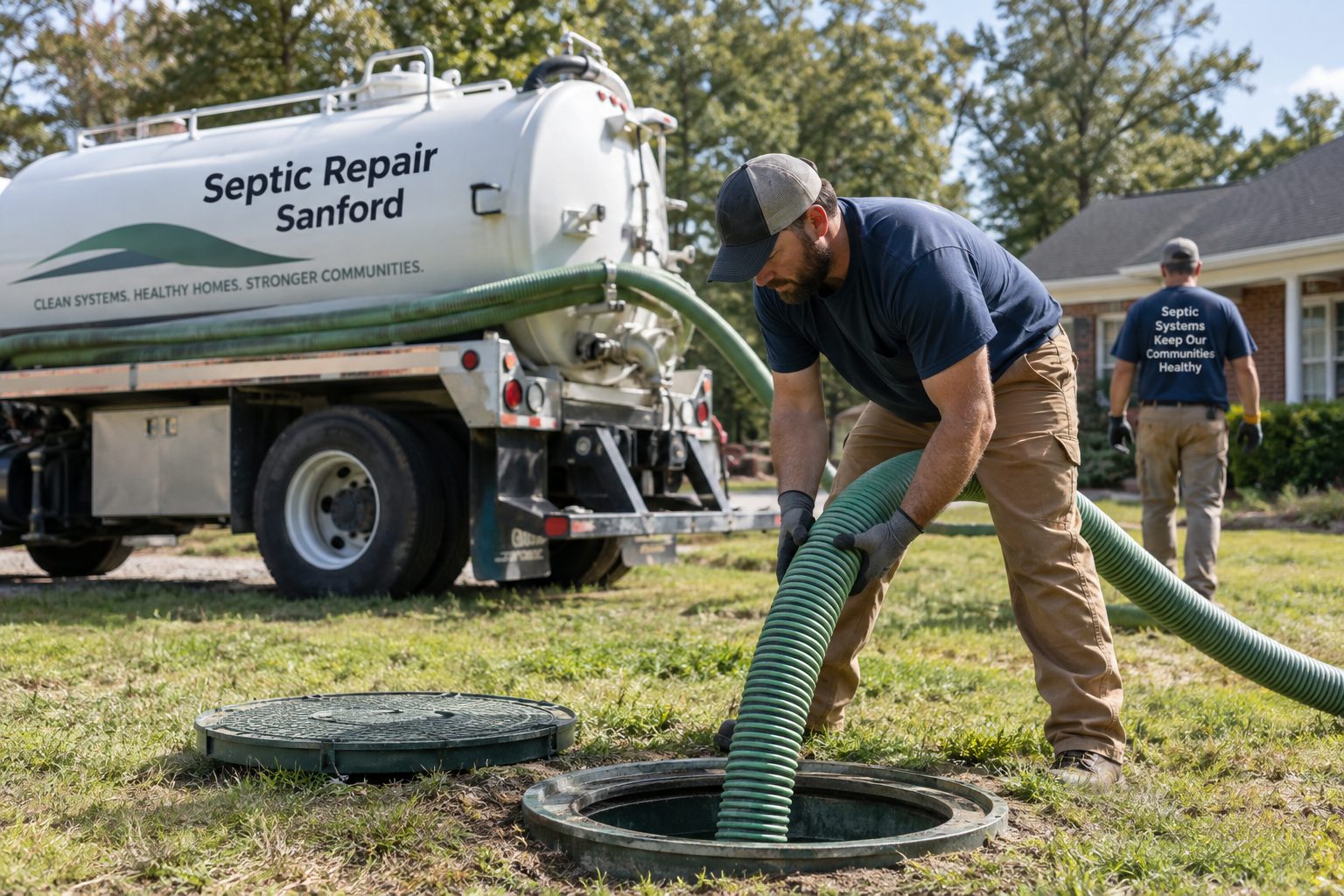
We ask what is happening, when it began, whether it affects one fixture or the whole house, and whether weather or water use changes the problem.
We locate accessible septic components and determine which parts of the wastewater path need attention.
We look for signs of restriction, abnormal wastewater levels, damage, saturation, surfacing wastewater, or other relevant conditions.
We compare the observed conditions with the reported symptoms to identify the likely source of the problem.
We explain whether pumping, cleaning, repair, field work, or another course of action appears appropriate.