
Help for Urgent Septic Problems
Emergency Septic Service in Sanford, NC
If wastewater is backing up or surfacing, reduce water use and call for service. Call (984) 266 2722
Help for Urgent Septic Problems
If wastewater is backing up or surfacing, reduce water use and call for service. Call (984) 266 2722
A septic emergency usually means wastewater is no longer moving where it should. Sewage may back up through toilets or tubs, wastewater may surface outdoors, several drains may stop working at once, or a septic alarm may be accompanied by obvious drainage trouble. These situations can damage the property and create unsanitary conditions, so the first priority is to reduce the amount of wastewater entering the system.
Stop unnecessary water use while you arrange service. Avoid laundry, dishwashing, long showers, repeated toilet flushing, and other high-volume use. Keep children and pets away from any area where sewage has surfaced. Septic Repair Sanford responds to urgent septic problems by identifying the likely restriction or failure and focusing first on the steps that can protect the property and restore usable flow where possible.
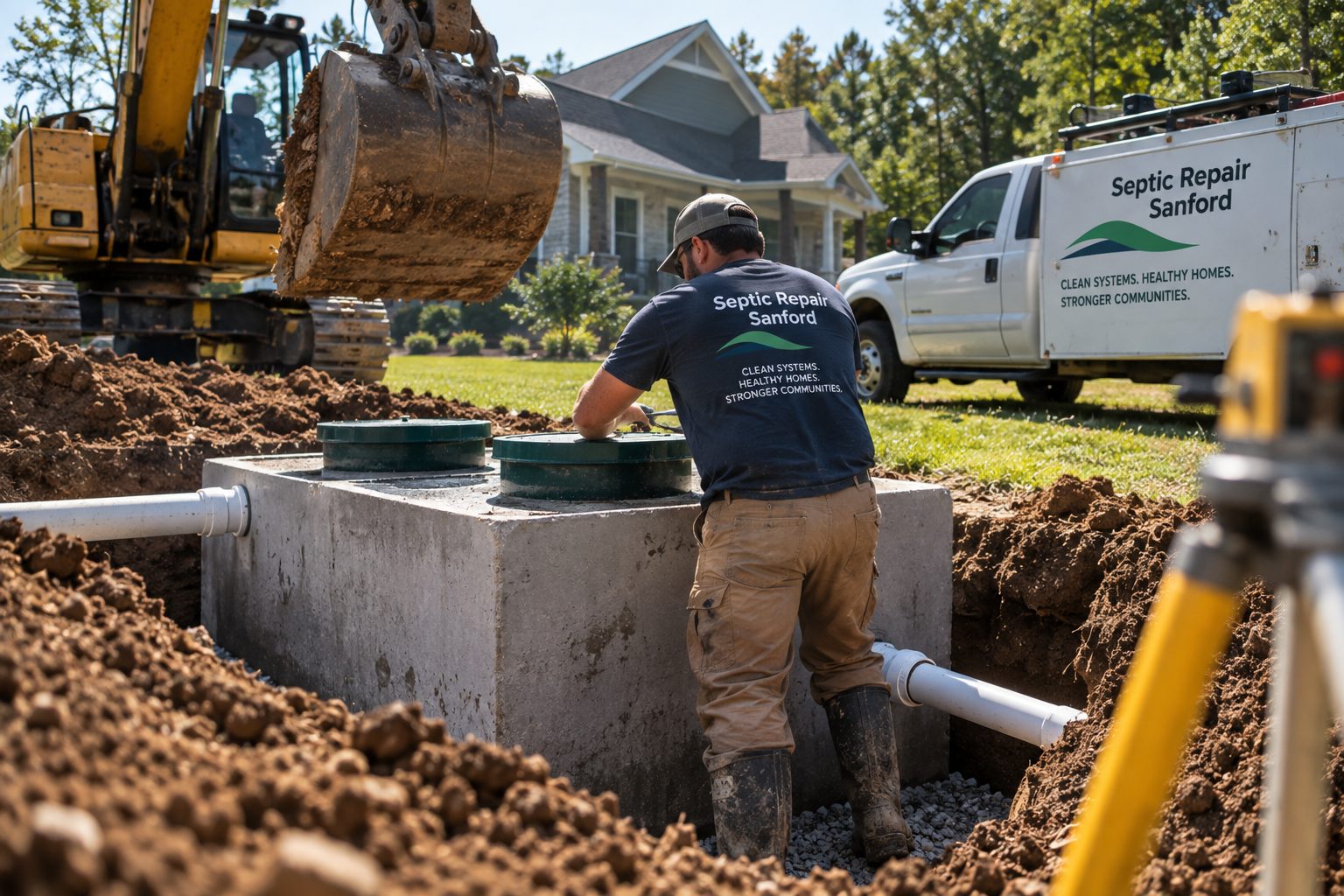
Not every septic concern requires emergency attention, but active sewage backups and surfacing wastewater should be treated seriously. The immediate symptom may be caused by a full tank, clogged sewer line, failed pump component where applicable, blocked outlet, damaged piping, overloaded drain field, or another failure in the wastewater path. Emergency service therefore combines short-term problem control with diagnosis. Pumping may be necessary in some cases, but pumping alone is not automatically a permanent repair. If the underlying problem is downstream of the tank or in the building sewer, the symptoms can return. We explain what is being done to address the immediate situation and what additional repair may be required.
When sewage comes back through a toilet, tub, shower, or floor drain, stop sending additional water into the drainage system. Continued flushing and appliance use can force more wastewater into the affected area. Avoid direct contact with sewage and keep the contaminated space isolated as much as practical. We investigate whether the backup appears related to the building sewer, septic tank capacity, downstream flow, or the drain field. The first service may involve pumping or cleaning, followed by additional repair if the system cannot move wastewater normally.
Wastewater appearing above ground near a septic tank, piping route, or drain field creates both a property concern and a sanitation issue. Keep people and animals away from the area and reduce household water use. Do not drive across or heavily disturb saturated septic areas because that can worsen soil or component damage. The location of the surfacing wastewater can help narrow the problem, but an onsite evaluation is needed to determine whether the cause involves a leak, overflow, distribution issue, or failing treatment area.
If multiple fixtures stop draining at the same time, the problem is likely farther downstream than an individual sink or toilet trap. The main building sewer or septic system deserves attention. Gurgling, bubbling toilets, or water rising in a low fixture when another fixture drains can be useful clues. Avoid repeated plunging or adding chemical drain products throughout the house without knowing where the restriction is. Septic-oriented troubleshooting can help determine whether sewer line cleaning, pumping, or another repair is appropriate.
Emergency work sometimes restores flow before the entire underlying problem can be corrected. For example, pumping a tank may give a household temporary capacity even though a downstream drain field issue still exists. It is important to understand that difference so a temporary improvement is not mistaken for a completed repair. We explain whether the urgent service appears to have addressed the cause or simply controlled the immediate symptom, then outline the next step when more work is needed.
| Service | Estimated Cost | Average |
|---|---|---|
| Urgent septic troubleshooting | Varies by timing, location, and system condition | Estimate based on emergency scope |
| Emergency pumping | Varies by tank access, capacity, and conditions | Quoted for the service needed |
| Emergency repair or cleaning | Varies by blockage, damage, and required work | Estimate after diagnosis |
Urgent septic pricing depends on the service required, access, timing, travel, and whether pumping, cleaning, excavation, or repair is needed.

We prioritize active backups, wastewater exposure, and conditions that can worsen if household water use continues.
Emergency pumping or cleaning can restore flow, but we also consider whether an underlying system failure still needs repair.
You receive a practical explanation of what was done and whether the system needs follow-up work.
We provide urgent septic help across Sanford and our surrounding service area.
For an active sewage backup or surfacing wastewater, cut household water use and contact us with your location and symptoms.
Free — no obligations
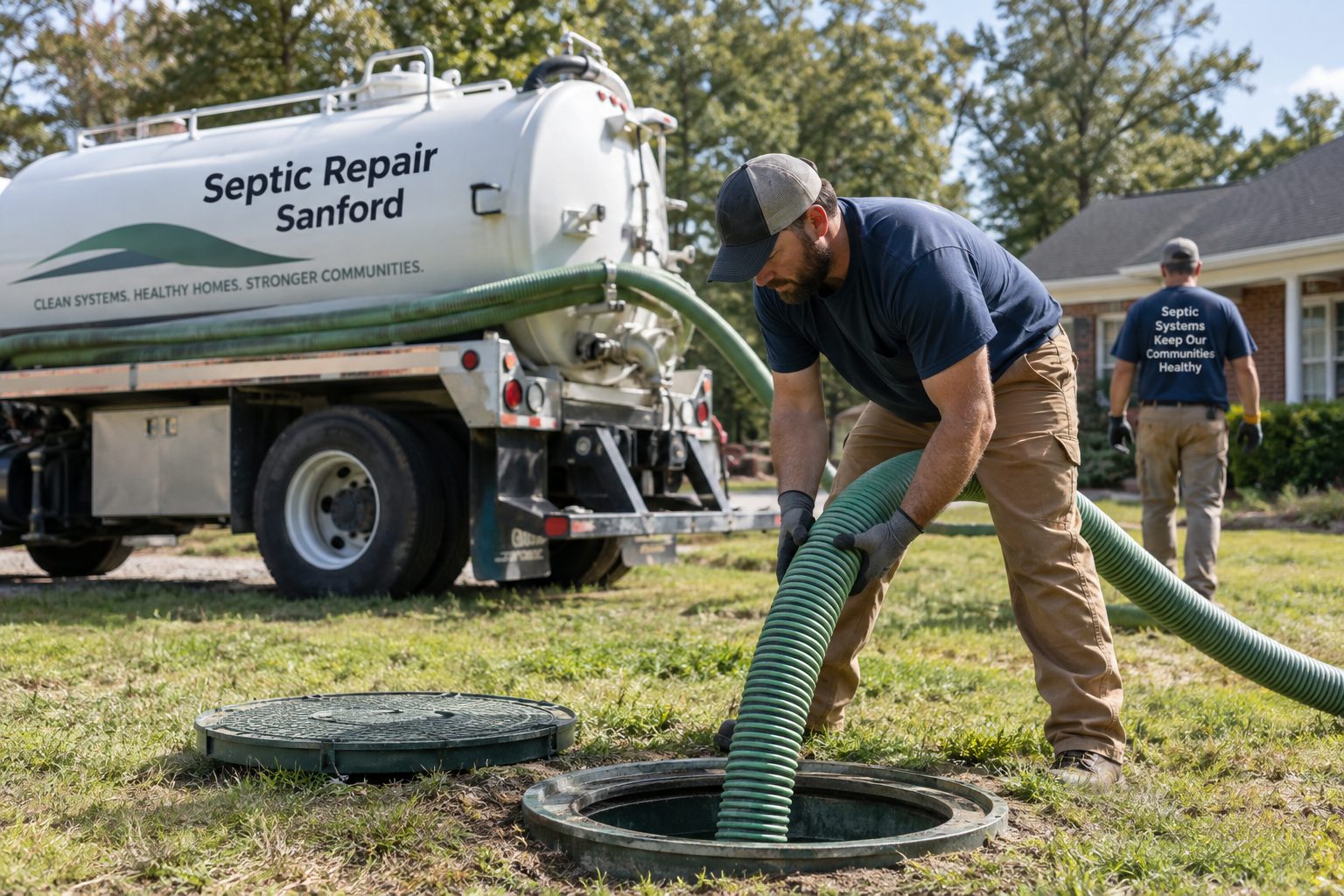
Stop laundry, dishwashing, showers, and unnecessary flushing so less wastewater enters the system.
Keep everyone away from sewage-contaminated indoor or outdoor areas and avoid direct contact.
Tell us whether wastewater is backing up, surfacing outdoors, affecting every drain, or causing another urgent condition.
We evaluate the system to determine whether pumping, line cleaning, component repair, or another action is needed.
If the emergency service provides only temporary relief, we explain what needs to be corrected for a longer-term solution.